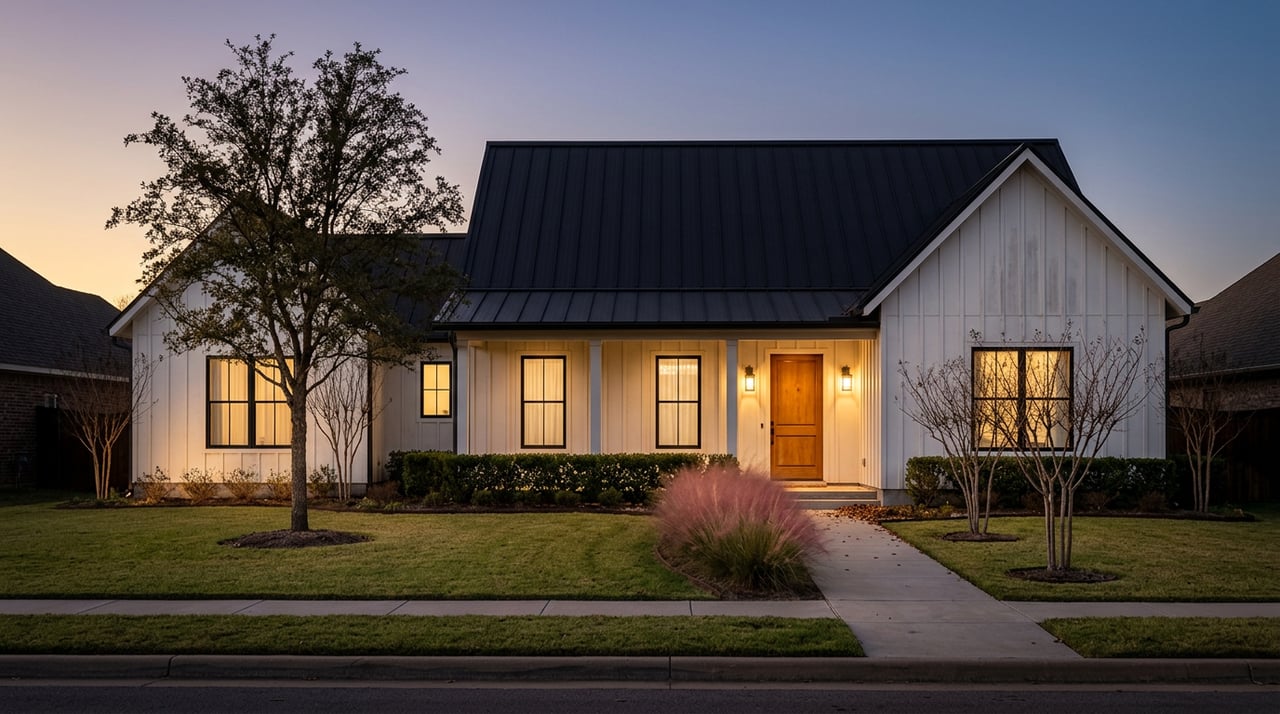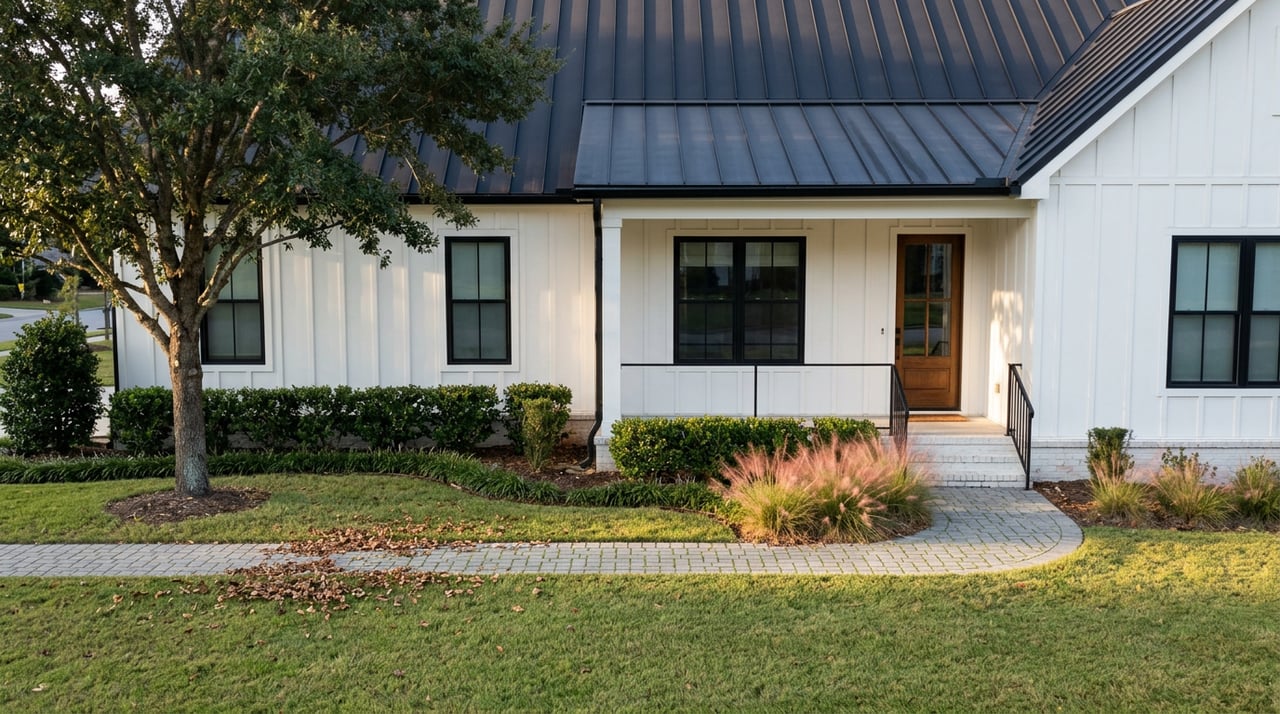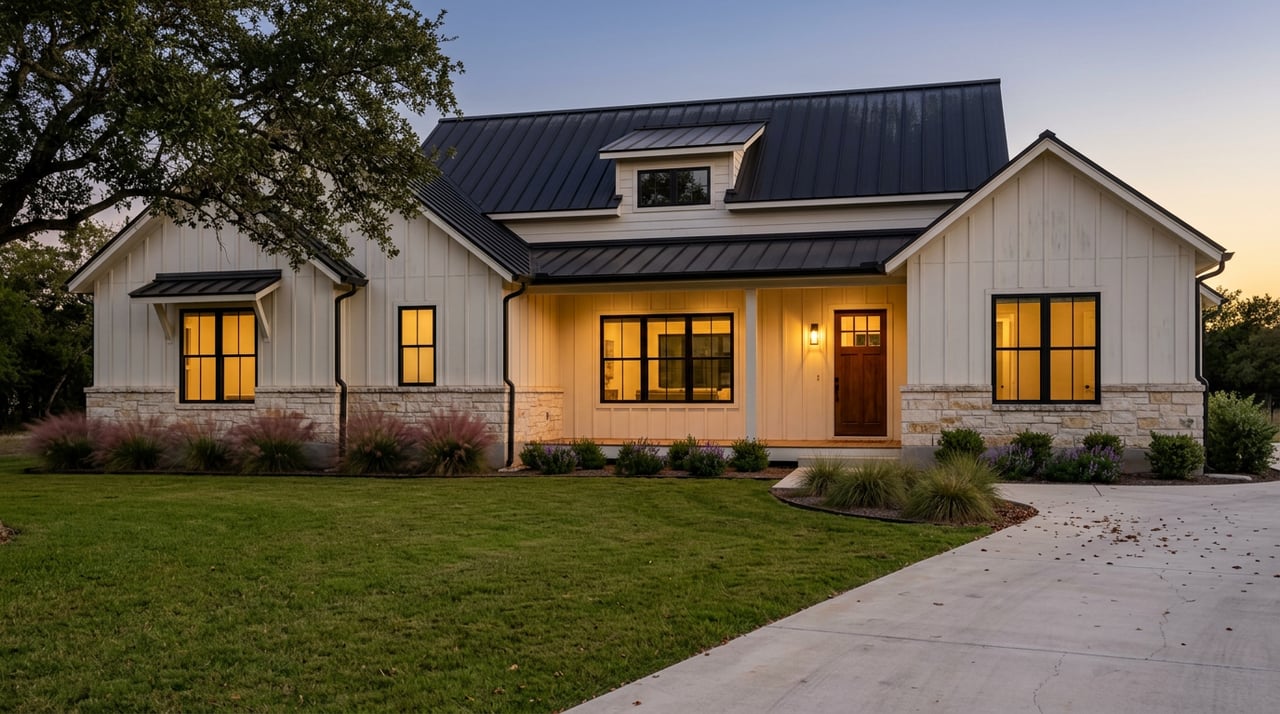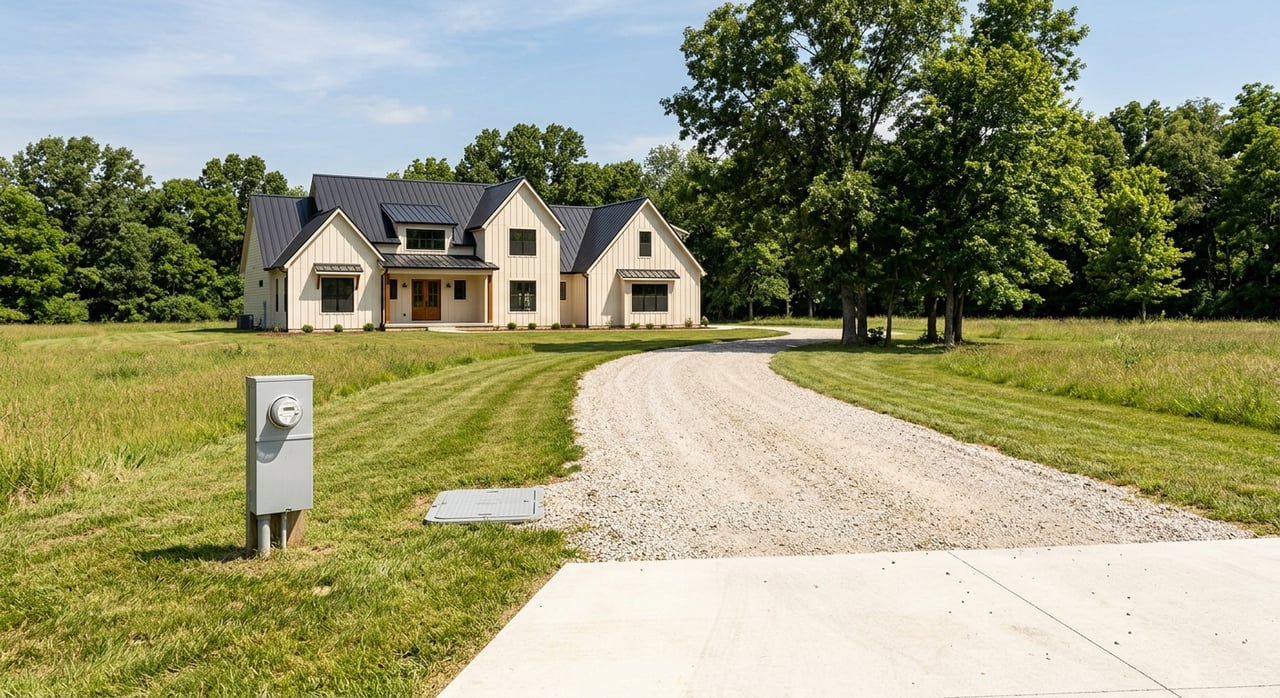
A buyer can review the floor plan, acreage, builder specifications and asking price, then still miss one of the most consequential systems serving the property.
At Summit Ranch, that system is the private well.
The community’s own materials state that water is supplied through an individual homeowner well on each lot. Homes also use homeowner-constructed septic systems. That means a buyer is not simply taking over plumbing inside the house. The buyer is acquiring the equipment, records and ongoing responsibility tied to a private water source.
The reassuring part is that this does not need to become a last-minute surprise. The key is to stop treating “well inspection” as one box on a general inspection order.
The practical rule for Summit Ranch buyers: Review the well in three separate parts: its paper trail, its mechanical performance and its water quality.
That distinction can change what you order, when you order it and what questions you ask before closing.
Why the Summit Ranch Checklist Is Different
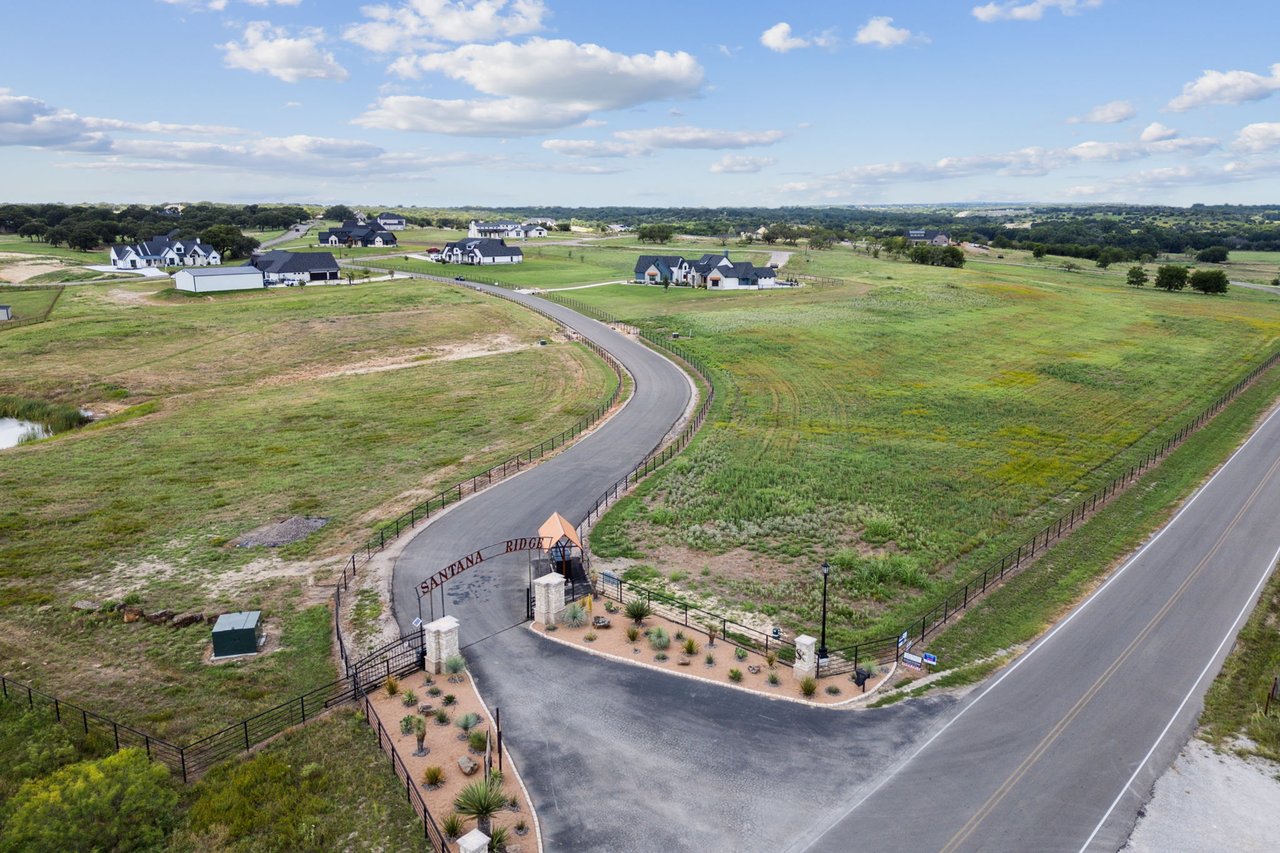
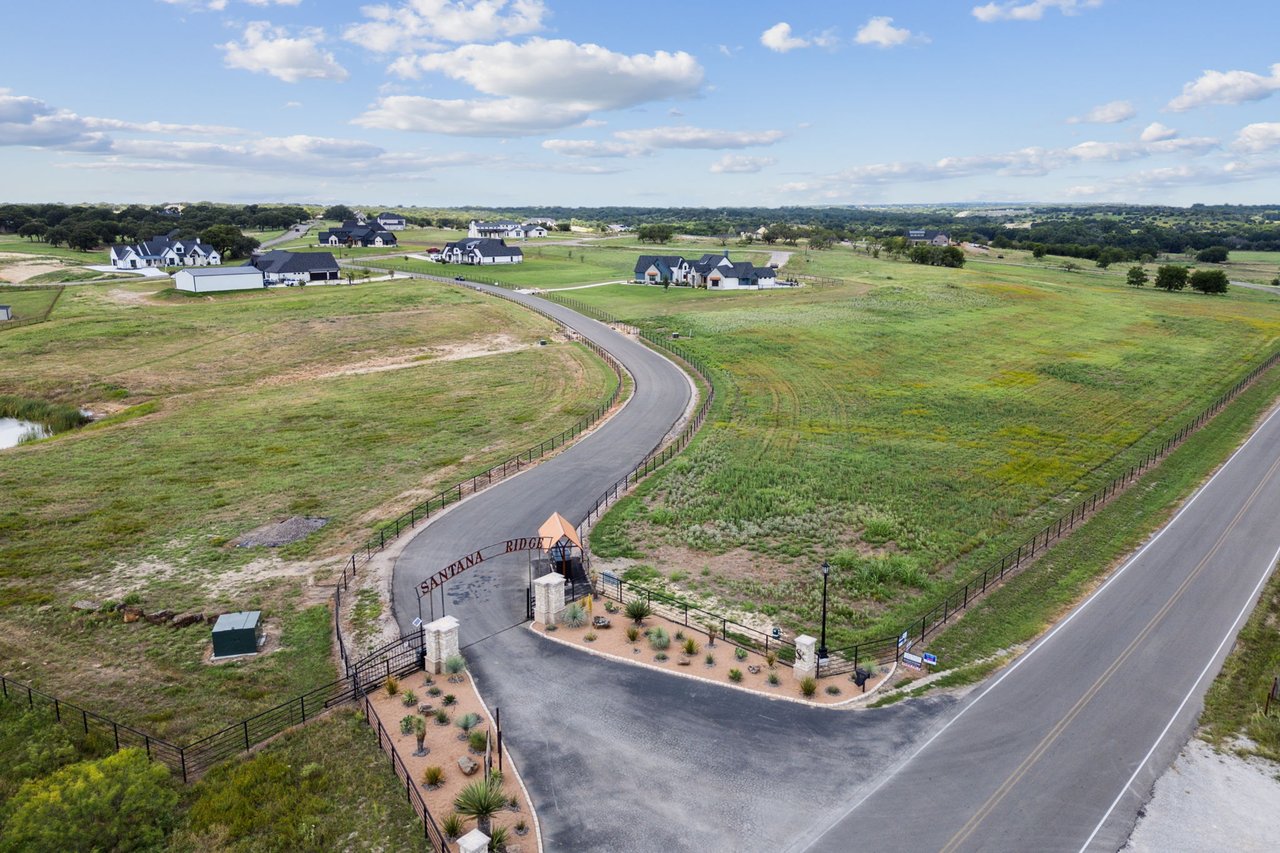
Parker County records describe Summit Ranch as a 131.005-acre development off Muir Road with well water. The community FAQ describes 2- to 4-acre homesites, with 45 lots inside the gated entrance and 14 lots accessed from Muir Road or Savage Lane.
Acreage can create a sense that the water question is already settled. There is room for a well, so the assumption is that everything must be fine.
The lot size does not answer these transaction questions:
- Is the well properly documented?
- What equipment serves the house?
- How does the system perform under use?
- Has the water been tested through an appropriate laboratory?
- Where are the well, septic tank and septic field located?
- Does the lender require a particular test or collection process?
- Has the well ownership record been addressed?
Those questions matter across both completed homes and Aledo land lots. A resale buyer is evaluating an existing system. A raw-lot buyer may be budgeting for registration, drilling, pump equipment, testing and site placement.
Current inventory also puts the overlooked expense in perspective. As of July 2026, active builder asking prices reviewed for Summit Ranch ranged from $1,149,900 for 5009 Frost Creek to $1,999,995 for 4001 Charleston Peak. These are active asking prices, not closed comparable sales or proof of market value.
At that price level, a few hundred dollars for specialized due diligence can look minor. Yet the findings can affect repair requests, treatment decisions, construction planning and the closing schedule.
A General Home Inspection May Not Settle the Well Question
Under the Texas Real Estate Commission’s inspection standards, a private well is an optional system. A TREC-licensed inspector is not required to inspect it unless the inspector agrees to include that service.
When a private-well inspection is included, the standards call for steps such as operating at least two fixtures at the same time, recommending or arranging coliform testing, identifying pump and storage equipment, noting proximity to a known septic system and reporting visible deficiencies involving pressure, flow, switches, accessible equipment and the wellhead.
That is useful information, but the scope has limits. The inspector is not required to:
- Open or remove pumps, heads, screens or lines
- Determine the reliability of the water source
- Locate underground leaks
- Guarantee future supply or performance
This creates the friction buyers often discover too late. “The home was inspected” and “the private water system was fully evaluated” are not interchangeable statements.
A buyer should confirm the scope in writing before the inspection appointment. If the general inspector does not provide the needed service, a licensed well or pump specialist may need to be scheduled separately.
A local example shows what a more focused mechanical review can cover. Home Pro Inspections in Weatherford says its well service measures water pressure, checks pump amperage to approximate gallons per minute and horsepower, and visually reviews fittings, equipment and water flow. That is more specific than simply running a faucet, though every buyer should verify the exact service and reporting format before hiring any provider.
The Missing Line Item Is Really Three Line Items
The cleanest way to evaluate a Summit Ranch Aledo private well is to separate the work instead of purchasing a vaguely defined “well check.”
| Review | What it should help answer | Where to start |
|---|---|---|
| Records | Is there a well report, registration number, ownership record and equipment information? | Seller documents, Upper Trinity GCD and TDLR resources |
| Mechanical performance | What equipment is visible, and how do pressure, flow and accessible components perform? | Inspector or licensed well and pump professional |
| Water quality | What does an appropriate laboratory analysis show for the selected panel? | TCEQ-accredited laboratory or qualified sampling provider |
Start with the paper trail
Texas requires a license to drill a water well or install its pump. The Texas Department of Licensing and Regulation maintains reporting resources for wells drilled after 2002.
Ask for the seller’s available well report, pump information, maintenance history, prior laboratory reports and registration details. If a document is missing, search the state and district resources early enough to follow up.
The Upper Trinity Groundwater Conservation District also provides an Application for Transfer of Well Ownership. The form requests information that can be useful during due diligence, including the registration ID, coordinates, well depth, designed production capacity, pump type, motor size and intended use.
No single missing field automatically tells you that a well has a problem. It tells you that more records work may be needed before the transaction reaches the closing table.
Test performance as its own task
A mechanical review should clarify exactly what was observed and tested. Pressure, accessible equipment and flow under normal operation are different questions from water quality.
Ask the provider whether the service includes:
- Visible wellhead and equipment condition
- Pressure and flow observations
- Pump and pressure-switch operation
- Storage or pressure-tank observations
- A written report with photos
- Recommendations for specialist follow-up
Do not assume the provider will determine long-term source reliability. TREC does not require a general inspector to make that determination, even when the optional well system is inspected.
Order laboratory testing separately
The Texas Commission on Environmental Quality states that private-well owners are responsible for regularly testing their water. TCEQ recommends using an accredited drinking-water laboratory.
The Texas Water Development Board advises consumers to call the laboratory to confirm what it tests, how samples must be collected, drop-off hours and current pricing.
That call matters because “water test” can describe very different panels. A basic bacteriological test does not necessarily include the same analytes as a broader panel.
What Should Buyers Budget?
There is no single fixed Parker County price because providers package inspections and laboratory panels differently. Current advertised examples show why the budget needs more than one line.
A North Texas inspection company currently lists:
- $75 for a water-well inspection
- $180 for bacteria and total-coliform testing
- $525 for a panel adding lead and nitrate
Culligan of Weatherford advertises well-water testing starting at $99, with results generally available in five to seven days. Its listed testing can include lead, arsenic, nitrates and E. coli. Buyers should confirm the exact panel, sampling method, laboratory credentials and turnaround time before ordering.
These are vendor examples, not guaranteed Summit Ranch prices. They do show the mechanism clearly. Selecting only the least expensive option may leave a buyer with a mechanical observation but no laboratory analysis, or a limited water panel but no evaluation of the pump system.
A New Texas Disclosure Helps, but It Does Not Replace Testing
Texas added a timely layer to this process on July 1, 2026. The new TREC Water Notice: Seller’s Disclosure About Groundwater and Surface Water Rights was created to provide buyers with more information about groundwater rights and wells connected to a property.
The disclosure asks about:
- The number of known wells
- How many wells are in use
- Wells that are capped, covered, plugged or abandoned
- Groundwater-district registration or permit numbers
- Shared or off-site wells
- Groundwater rights connected to other property
- Groundwater rights that may have been severed
This is valuable transaction information. The form also states that it is not a substitute for inspections or warranties.
Think of the disclosure as the map for follow-up questions. It is not the mechanical test or laboratory report.
Raw-Lot Buyers Have a Different Cost Equation
Summit Ranch falls within the Parker County jurisdiction of the Upper Trinity Groundwater Conservation District. The district’s current fee page lists a $600 nonrefundable new-well registration fee and a $100 refundable well-completion-report deposit.
Those costs are most relevant to buyers planning a new well or a substantial change to an existing one. The district currently lists a $0 application fee for an existing well.
The new-well application asks about minimum tract size, property-line spacing and spacing from other wells. It also requests the estimated depth, designed capacity, pump information and licensed driller. The application states that approval does not guarantee adequate water at the proposed site.
Site planning must account for the septic system too. TDLR guidance generally calls for a well to be at least 50 feet from a property line unless enhanced grouting conditions are met. It identifies separation of at least 50 feet from a septic tank and 100 feet from a drain field or spray area.
A 2-acre or 4-acre homesite may offer options, but acreage alone does not verify compliant placement. Review the proposed or existing locations before finalizing a custom-home site plan.
Financing Can Add a Second Deadline
Loan requirements vary, so buyers should ask their lender what will be required before ordering a test.
VA guidance provides one clear example. An individual water supply must satisfy the applicable health authority’s requirements. Testing must be completed by a disinterested third party, including collection and transportation of the sample. VA water-quality results are generally valid for 90 days unless the local authority specifies otherwise.
That creates two timing risks. Ordering too late can hold up underwriting. Ordering too early can allow the report to expire before closing if the transaction is delayed.
The safest approach is coordination among the buyer, agent, lender, inspector and testing provider at the beginning of the option period.
A Practical Summit Ranch Well Checklist
Before or immediately after making an offer
- Ask what well records are available.
- Confirm whether the property has one well or more than one.
- Ask whether the well serves only the subject property.
- Confirm the lender’s water-testing requirements.
- Identify who will inspect the mechanical system and who will collect the laboratory sample.
During the option period
- Review the seller’s water disclosure.
- Order the agreed mechanical inspection.
- Select the laboratory panel based on lender requirements and professional guidance.
- Verify the visible relationship among the well, septic tank and septic field.
- Obtain written findings and current quotes for any recommended follow-up.
Before closing
- Confirm receipt of final laboratory results.
- Confirm that lender conditions involving the well have been cleared.
- Organize the well report, registration information and equipment records.
- Address the Upper Trinity GCD ownership-transfer paperwork when applicable.
- Keep copies for future maintenance and resale.
En Español
La inspección general de la casa no siempre incluye una evaluación completa del pozo privado. Antes de cerrar, confirme los registros, el rendimiento del sistema y la calidad del agua.
Anabel provides straightforward English and Spanish guidance so each client can understand the scope, timing and next step without feeling rushed.
Frequently Asked Questions
Does every Summit Ranch property have the same well depth or water quality?
No uniform depth, yield or water-quality result should be assumed. Publicly indexed property-specific reports were not available for the active addresses reviewed. Evaluate the records and test results for the individual property.
Does the standard home inspection include the private well?
Not automatically. TREC classifies private wells as an optional inspection system. Confirm in writing whether the inspector will include it and what the service covers.
Is the seller’s new Texas water disclosure enough?
No. The disclosure provides the seller’s knowledge about wells and water rights. The form expressly says that it does not replace inspections or warranties.
Plan the Water Review Before the Closing Countdown
A Summit Ranch well does not need to make a purchase feel uncertain. It needs a clear scope and an early schedule.
The strongest offer strategy accounts for the records, the equipment, the laboratory analysis and the lender’s timing before those questions become closing conditions. That is how a hidden line item becomes a manageable part of buying Parker County real estate.
If you are comparing Summit Ranch homes, evaluating Aledo land lots or preparing an acreage property for sale, The Wright Team Texas can help organize the questions and local due-diligence steps in English or Spanish.